Customer Reviews: How They Boost Local Business Visibility
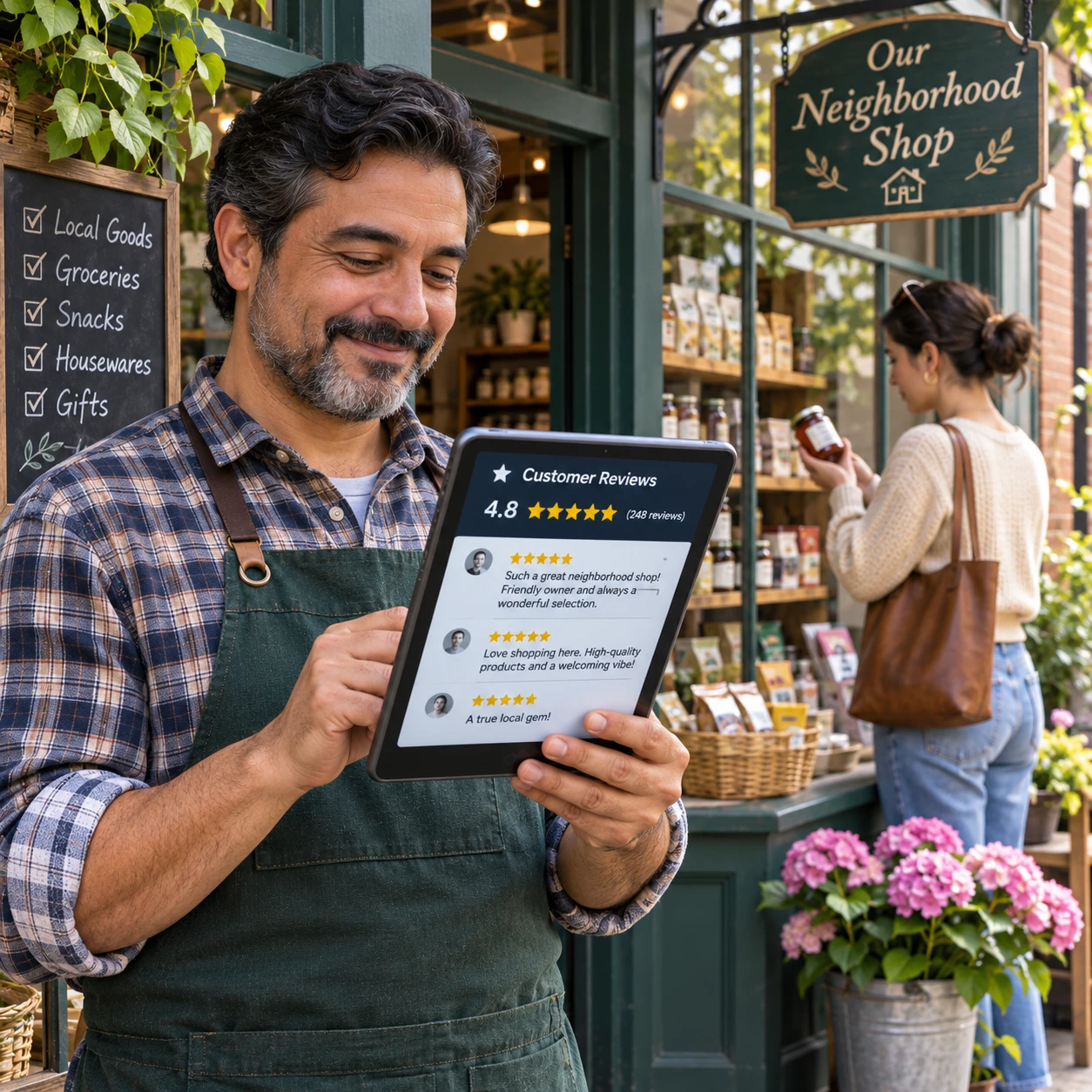
When someone searches for a nearby café, plumber, or salon, customer reviews can help decide which business to visit. They show what real customers value, answer practical questions, and give people more confidence to take the next step.
Reviews also contribute to a business’s local online presence. They work alongside accurate business listings, useful service details, and a clear location to help customers discover and evaluate local options. They cannot guarantee a particular search position, but managing them thoughtfully can make a business easier to understand and trust.
Why customer reviews matter to local businesses
Customer reviews help local businesses earn attention by showing prospective customers what an experience may be like. They build trust through specific feedback and can influence whether someone calls, visits, or keeps comparing options.
A star rating offers a quick impression, while the written review adds context. A customer might mention that a bakery opens early, a mechanic explained a repair clearly, or a shop has accessible entry. Those details help people decide whether the business fits their needs.
Reviews can also distinguish similar businesses. If two nearby providers offer the same service, customers may look at the number of reviews, how recent they are, and whether owners respond. A steady collection of genuine feedback gives people more evidence to assess, although a high rating alone cannot tell the whole story.
For a local business, the practical value is broader than visibility in search results. Reviews can reveal recurring strengths and issues. If several customers praise quick appointment scheduling, a business can make that benefit clearer in its listing. If people repeatedly mention difficulty finding the entrance, better directions or signage may help.
How reviews contribute to local search discovery
Reviews support local search discovery by adding customer feedback to a business’s wider online presence. Search visibility also depends on factors such as relevance, location, and accurate, complete business information, so reviews are one part of a broader picture.
Local SEO connects a business’s online details with what nearby customers are searching for. Consistent business listings can help people and search services identify a business’s name, address, phone number, hours, category, and services. Reviews add a customer perspective to those facts.
Review platforms and local business directories serve a related but distinct purpose. A directory helps customers find businesses by location, category, or service, then compare useful details. Ratings and review volume can add context to that comparison, while the listing itself should answer basic questions such as where the business is and when it is open.
There is no reliable formula that turns a specific number of reviews into a guaranteed ranking improvement. Review signals may be considered by search platforms, but the precise systems vary and change. A sound approach is to earn honest feedback, keep business information accurate, and make the listing genuinely useful rather than chasing a review count.
What customers look for in reviews
Customers usually look for a combination of rating, recency, detail, and consistent themes. They want enough information to judge whether a business is dependable and suited to their particular need.
Ratings and review volume provide a quick snapshot, but people often read beyond the average. A small number of reviews may represent limited feedback; a larger set can show a wider range of experiences. Neither number tells customers everything, so the review content matters.
Recency helps people understand whether feedback reflects the current business. A review from several years ago may describe different staff, services, or hours. Newer reviews can indicate what customers have experienced more recently, though one recent complaint should be read in context.
Specific details are often more useful than general praise. “The team explained the estimate before starting” tells a prospective customer more than “Great service.” Patterns matter too. Several independent mentions of clear communication or long wait times are more informative than a single isolated comment.
Readers also notice how a business responds. A calm, helpful reply can show that the owner pays attention and is willing to address concerns. It does not erase a negative experience, but it gives readers more context about how the business handles feedback.
How to encourage more genuine reviews
To encourage genuine reviews, ask customers at an appropriate moment, make the process simple, and leave the choice entirely up to them. A respectful request invites honest feedback without pressure or reward.
- Choose a natural moment. Ask after a completed service or purchase, when the customer has had time to form an opinion. Avoid interrupting a busy interaction or repeatedly following up.
- Use a direct, neutral invitation. For example: “If you’d like to share feedback about your visit, you can leave a review on our listing.” Do not ask only satisfied customers, or suggest a particular rating or wording.
- Make the route easy. Share the correct review-platform link by email, text, or a printed receipt. Check that it opens to the right business profile and works on a mobile phone.
- Train staff to ask consistently and politely. A simple invitation should feel optional. Employees should not pressure customers, monitor whether they posted, or ask them to revise a review.
- Follow each platform’s rules. Do not buy reviews, write reviews for customers, or offer discounts, gifts, or other incentives in exchange for feedback. Incentives can compromise trust and may violate platform policies.
Asking every customer in a consistent, low-pressure way is more credible than trying to engineer a perfect rating. A mix of honest opinions gives future customers a realistic picture and gives the business useful feedback.
How to respond to positive and negative reviews
Respond to reviews with a brief, personal, and professional message. Thank customers for positive feedback, and address negative comments calmly while offering a practical next step when appropriate.
Replying to positive reviews
A useful reply acknowledges a specific detail without turning the conversation into an advertisement. For example: “Thank you for mentioning the same-day appointment. We’re glad the team could help.” That response feels attentive and reinforces the information other customers may find useful.
Replying to negative reviews
Start by recognizing the customer’s concern. Avoid arguing, sharing private information, or making claims you cannot verify. If you need more details, invite the reviewer to contact the business directly so you can investigate away from the public thread.
Not every complaint will be resolved to the customer’s satisfaction, and a reply cannot control how readers interpret the original review. Still, a measured response can demonstrate care and provide a clear account of what the business is prepared to do next. Keep the tone factual and consistent with the business’s actual policies.
Make reviews part of a complete local profile
Reviews work best as part of a complete local profile that combines customer feedback with accurate, useful business information. Keep directory listings current so customers can act on what they learn from reviews.
Check that the business name, address, phone number, website, hours, category, and services are correct on each important listing. Update special hours, temporary closures, and changes in services promptly. A strong rating is of little help if someone arrives at the wrong address or calls a disconnected number.
Use the same care with photos and descriptions. Clear images of the storefront, work, or menu can help customers recognize the business and understand what it offers. Keep descriptions factual, and avoid stuffing them with search terms that make the listing hard to read.
A local business directory helps people find nearby options and compare them in one place. Its value grows when listings contain reliable details and authentic customer feedback. Treat reviews as an ongoing source of customer insight, not a one-time campaign: invite them ethically, read them for patterns, respond thoughtfully, and keep the profile useful.
Frequently asked questions
How do customer reviews help local businesses get noticed?
Reviews give customers information to compare local businesses and can strengthen the business’s presence across search and directory platforms. Their impact depends on the wider local profile; reviews do not guarantee a particular ranking.
How can a business ask customers for reviews?
Ask customers neutrally after a genuine interaction, share a simple link to the correct review platform, and make clear that feedback is optional. Never pay for reviews or request a specific rating.
Should businesses respond to negative reviews?
Yes. A calm, specific response can show attentiveness and explain how the business will follow up. Keep private details out of public replies, and avoid arguments or defensive language.
Do reviews replace accurate business listings?
No. Reviews help customers evaluate a business, while accurate listings provide essential details such as location, contact information, hours, and services. Both are important to a useful local presence.